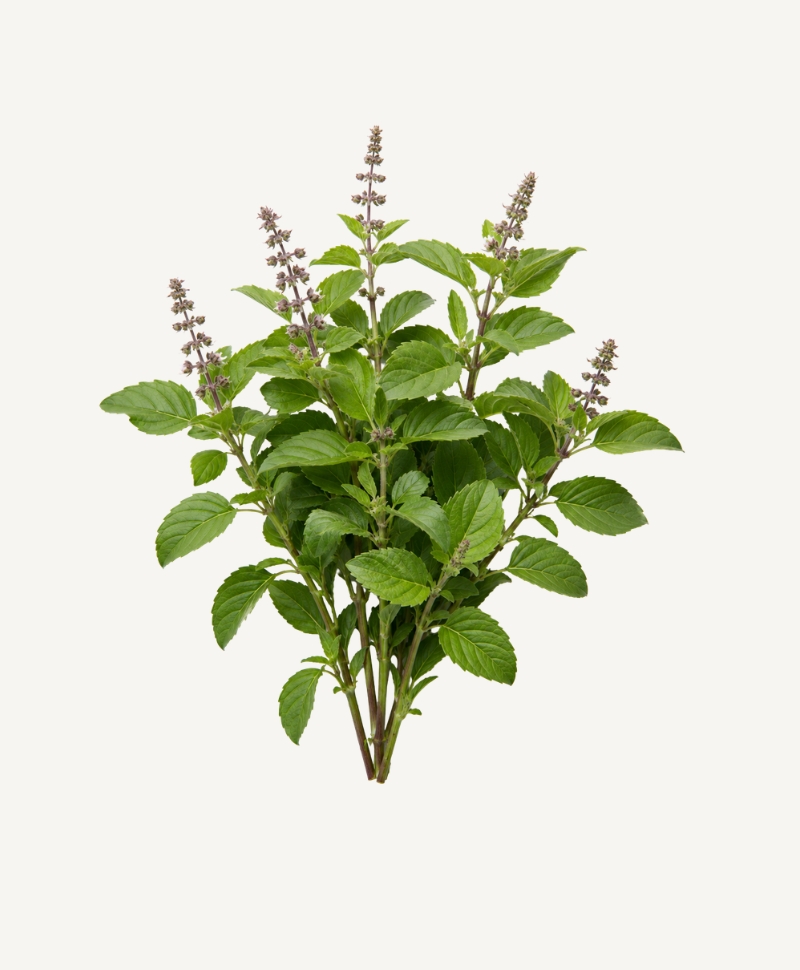
Holy Basil
Ocimum tenuiflorum
Lamiaceae
Indian subcontinent and Southeast Asia
Perennial
In Sanskrit, tulsi means “the incomparable one” – reflecting the belief that no other plant can take its place. It’s traditionally grown in a courtyard shrine outside Hindu homes and tended daily as an offering to Vishnu.
- Sacred to Hindu households and temples, planted in a special courtyard shrine and tended daily in devotion to Vishnu and Lakshmi.
- Brewed as a tea in Ayurvedic practice and valued as a rasayana, or rejuvenative, for supporting the body’s resilience to everyday stress – historical record, not a clinical claim.
- Chewed fresh or steeped as a folk remedy for coughs, colds, and digestive discomfort across South and Southeast Asia.
- Bushy, many-branched subshrub, usually 30–60cm tall, with hairy stems and a strong, clove-like fragrance when the leaves are bruised.
- Leaves are small, ovate, and softly toothed, ranging from bright green to deep purple depending on variety.
- Flowers cluster in tall purplish spikes that rise above the foliage, attracting bees.
- Closely related to culinary basil, but sharper and more peppery in scent and taste.
- Considered an adaptogen in Ayurveda – prized for its high “sattva,” or clarity-bringing quality.
The information provided on this page is for educational and informational purposes only and is not intended as medical advice. Always consult a qualified healthcare provider before using any herbal remedy, particularly if you are pregnant, nursing, taking medication, or managing a health condition.
Discover More Herbs in the Collection