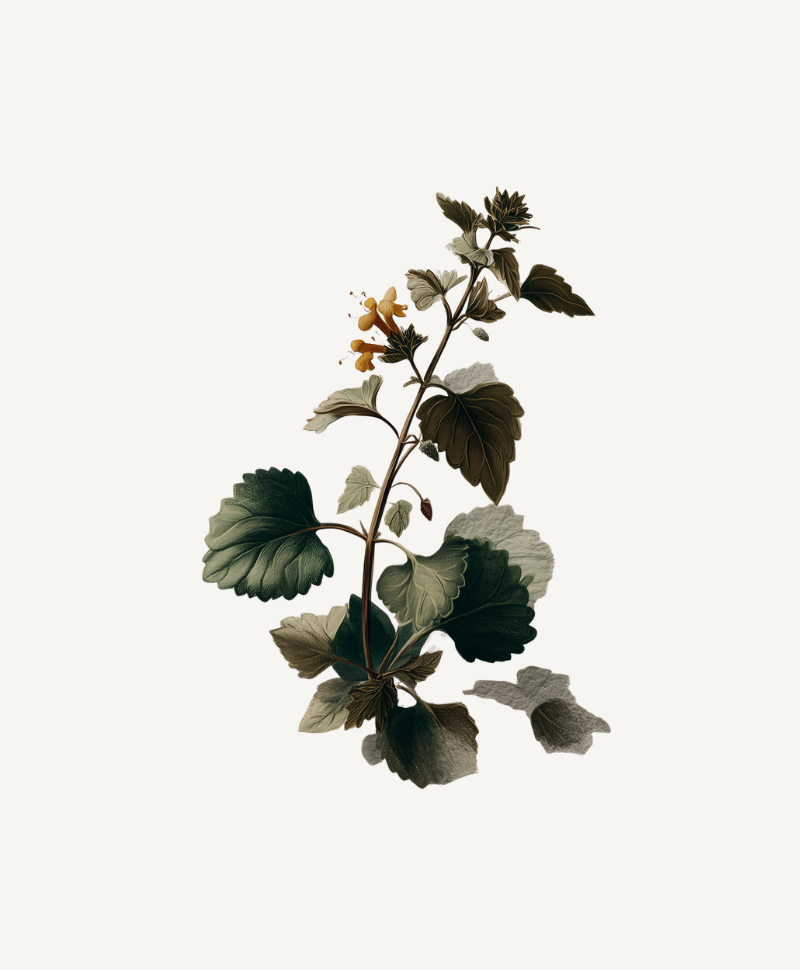
Horehound
Marrubium vulgare
Lamiaceae
Europe, North Africa, and Western Asia
Perennial
The name comes from the Old English hoar (“grey” or “downy,” as in hoarfrost) and hune, an old word for a plant of unclear origin – a nod to the felted, silvery-grey leaves.
- Steeped as a bitter tea or made into a syrup for centuries to ease coughs and soothe a sore throat – historical record, not a clinical claim.
- Counted among the bitter herbs of Jewish Passover tradition, alongside herbs like horseradish.
- Boiled down into hard “horehound candy” during the Industrial Revolution, sold as both a sweet and a remedy well into the 20th century.
- Grey-leaved herbaceous perennial, usually 25–45cm tall, with a distinctly woolly, felted texture across the whole plant.
- Square, downy stems typical of the mint family, though horehound’s scent is more musky and bitter than sweet.
- Leaves are wrinkled and deeply veined, with a crinkled, crepe-paper-like surface.
- Small white flowers cluster in tight whorls around the stem where the leaves meet it.
- Self-sows readily and tolerates poor, dry soil – considered a weed in parts of Australia and the Americas where it has naturalized.
The information provided on this page is for educational and informational purposes only and is not intended as medical advice. Always consult a qualified healthcare provider before using any herbal remedy, particularly if you are pregnant, nursing, taking medication, or managing a health condition.
Discover More Herbs in the Collection