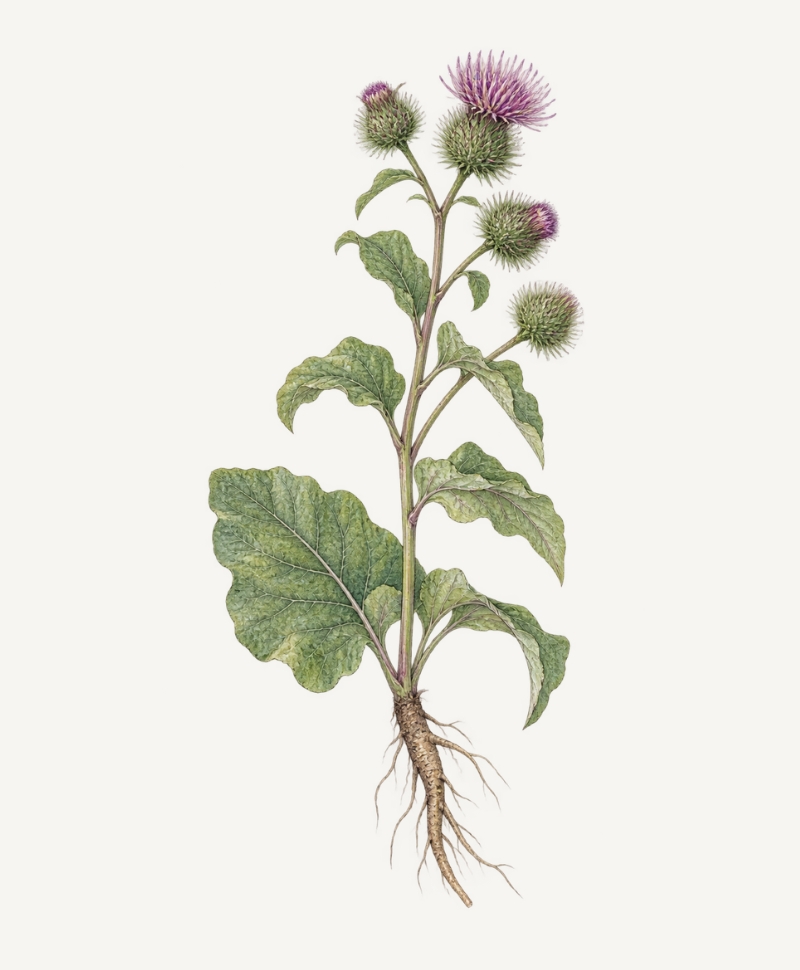
Burdock Root
Arctium lappa
Asteraceae
Europe and Northern Asia
Biennial
Burdock’s clingy, hook-covered burrs inspired Swiss engineer George de Mestral to invent Velcro in 1941, after picking them out of his dog’s fur and examining their tiny hooks under a microscope.
- Root sliced and cooked as a vegetable in Japanese cuisine, where it’s known as gobo, prized in soups, stir-fries, and pickles.
- A staple of European herbalism since at least the 16th century, documented by herbalists like Gerard and Culpeper as a general tonic and “blood purifier.”
- Root tea and tinctures traditionally taken to support skin and digestion – historical practice, not a clinical claim.
- Biennial, forming a rosette of large, heart-shaped leaves in its first year before sending up a branching flower stalk 3–6 feet tall in its second.
- Produces purple, thistle-like flowerheads wrapped in hooked bracts that ripen into the notorious clinging burrs.
- Deep, thick taproot can reach several feet down, making it a hardy coloniser of disturbed ground, roadsides, and waste places.
- Burrs cling readily to fur and fabric for seed dispersal – the same hooks that inspired the invention of Velcro.
- Thrives in average to rich, moist soil; considered a vigorous, sometimes weedy grower.
The information provided on this page is for educational and informational purposes only and is not intended as medical advice. Always consult a qualified healthcare provider before using any herbal remedy, particularly if you are pregnant, nursing, taking medication, or managing a health condition.
Discover More Herbs in the Collection