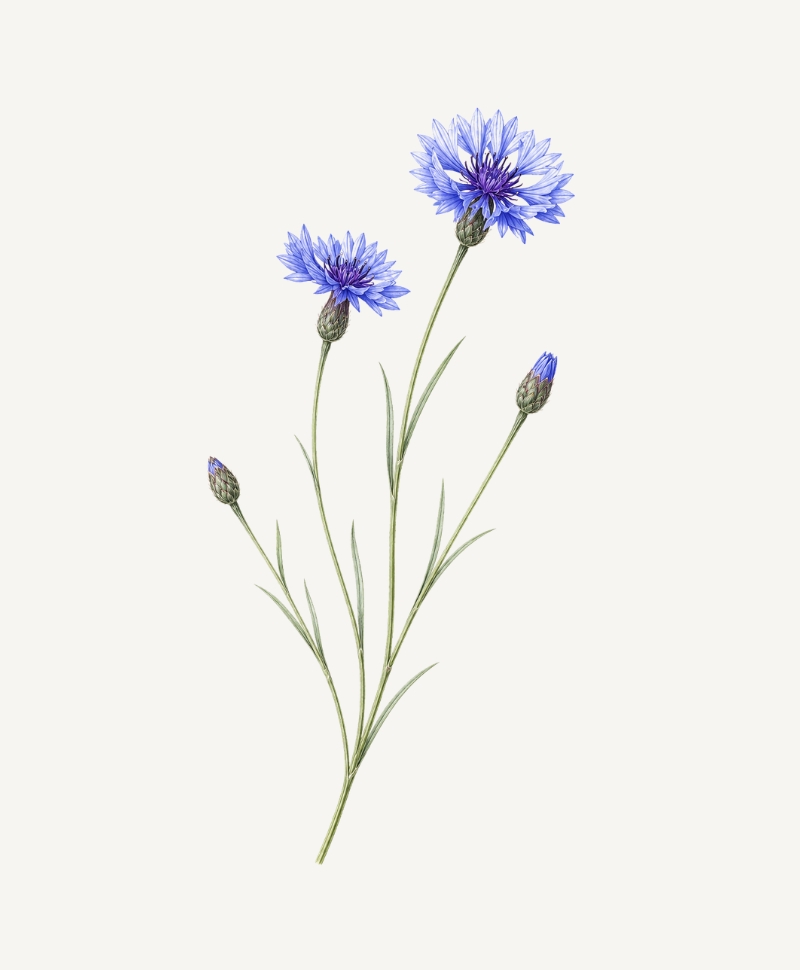
Blue Cornflower
Centaurea cyanus
The species name, cyanus, comes from the Greek kyanos – the same root that later gave English the color name “cyan” – a nod to the flower’s famously true blue.
- Long grown as a cut flower for its rare true-blue colour; petals are dried and used to tint teas, potpourri, and confectionery decoration.
- Once a familiar weed of wheat and rye fields across Europe, earning the folk name “Bachelor’s Button” from young men who wore a bloom to signal their intentions.
- Used in folk herbalism as a mild eye-wash and skin rinse – historical practice, not a clinical claim.
- Slender, wiry stems topped with vivid blue, fringed flowerheads, blooming from early to late summer.
- Once a common weed of cereal fields, now displaced by modern herbicides and considered near-threatened in parts of its native range.
- Thrives in poor, well-drained soil and full sun – struggles in rich or overwatered ground.
- Self-seeds readily and reblooms if deadheaded, giving a long, prolific flowering season.
- Attracts bees, butterflies, and other pollinators; a favourite of cutting gardens.
The information provided on this page is for educational and informational purposes only and is not intended as medical advice. Always consult a qualified healthcare provider before using any herbal remedy, particularly if you are pregnant, nursing, taking medication, or managing a health condition.
Discover More Herbs in the Collection