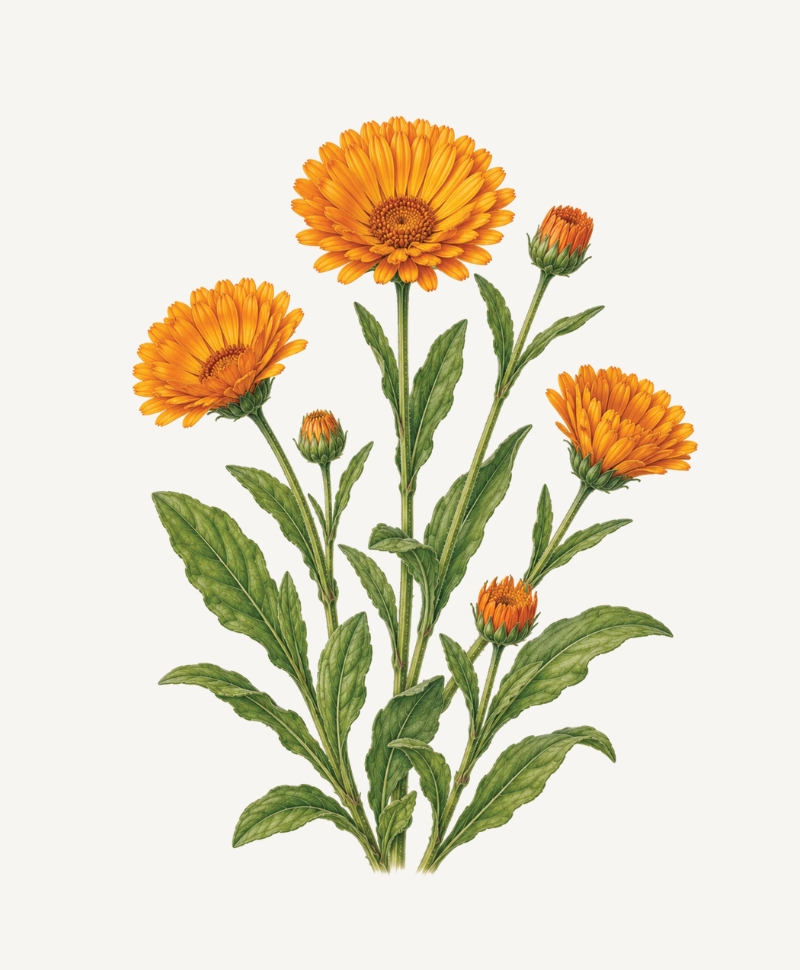
Calendula
Calendula officinalis
Asteraceae
Southern Europe and the Mediterranean
Annual
Radiant
Resinous
Everblooming
The name comes from the Latin calendae, the first day of the month – a nod to how freely it flowers in mild climates, often opening blooms in almost every month of the year.
- Petals steeped as a tea or infused in oil for skin-soothing salves and balms – a folk staple for minor cuts, chapped skin, and grazes.
- Used since medieval times as a saffron substitute, lending soups, rice, and butter a warm golden colour without saffron’s cost.
- Grown as a kitchen-garden “pot” herb and strewn as an edible garnish at Tudor feasts – hence the common name pot marigold.
- Bushy annual with sticky, faintly resinous stems and leaves, growing to around 50cm.
- Bright orange-to-yellow, daisy-like flowerheads that open with the sun and close at dusk.
- Blooms almost continuously from early summer through the first frosts if deadheaded.
- Undemanding and fast from seed – tolerates poor soil and self-seeds freely once established.
- A magnet for hoverflies and other beneficial insects, often grown as a companion plant in vegetable beds.
The information provided on this page is for educational and informational purposes only and is not intended as medical advice. Always consult a qualified healthcare provider before using any herbal remedy, particularly if you are pregnant, nursing, taking medication, or managing a health condition.
Discover More Herbs in the Collection