Campanulaceae
Eastern North America
Annual
The genus honours Matthias de l’Obel, physician to England’s James I; inflata refers to the swollen, bladder-like seed capsules that give the plant its shape late in the season.
- Chewed and smoked by Cherokee, Iroquois, and Penobscot peoples for respiratory complaints and muscular tension – historical record, not a clinical claim.
- Adopted by 19th-century American herbalist Samuel Thomson as the centrepiece of his “Thomsonian” system, prized – and later notorious – for its powerful emetic action.
- Earned a string of blunt folk nicknames – pukeweed, gagroot, vomitwort, asthma weed – each one describing exactly what it does.
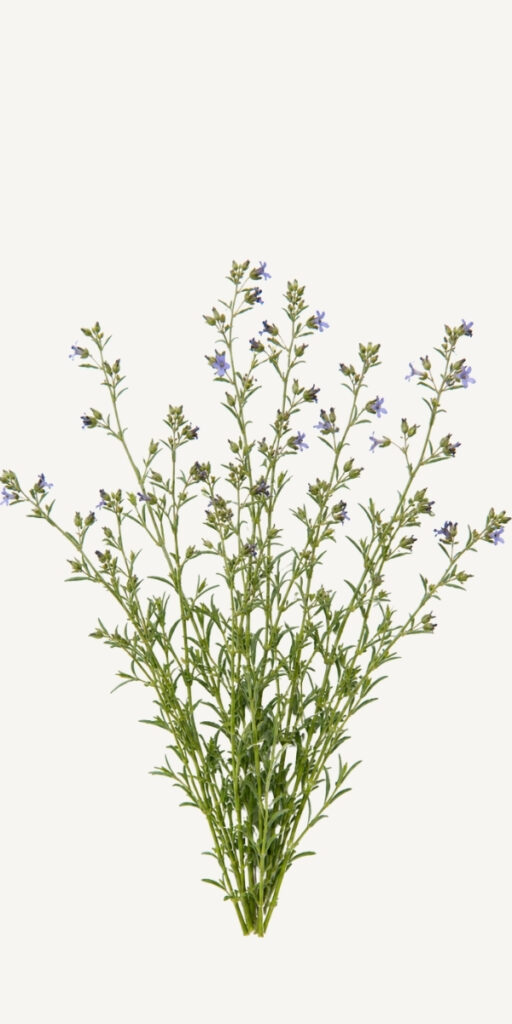
- Slender, downy-stemmed annual reaching 15-100cm, branching loosely as it matures.
- Oval, toothed leaves alternate up the stem; small pale violet flowers touched with yellow bloom from midsummer into autumn.
- Flowers give way to small, inflated seed capsules – the “inflata” of its Latin name – that rattle when dry.
- Contains lobeline and related alkaloids, concentrated most heavily in the seed; a potent plant, historically used only in small, carefully measured amounts.
- Self-seeds readily in open, disturbed ground, and once grew widely as a roadside weed across the eastern hardwood states.
The information provided on this page is for educational and informational purposes only and is not intended as medical advice. Always consult a qualified healthcare provider before using any herbal remedy, particularly if you are pregnant, nursing, taking medication, or managing a health condition.
Discover More Herbs in the Collection