Lamiaceae
Southern Europe and the Western Mediterranean
Perennial
Aromatic
Low-growing
Hardy
Ancient Greek soldiers bathed in thyme-infused water for courage before battle, and its name may come from the Greek thymos – “to fumigate,” but also carrying overtones of spirit and bravery. Its warm, herbaceous scent has marked it as a plant of strength for over two thousand years.
- Burned as incense in ancient Greek temples, its name possibly rooted in thymos, “to fumigate.”
- Given to knights and soldiers as a token of courage in medieval Europe, often embroidered onto scarves.
- Used across Mediterranean cooking for millennia to season meats, stews and breads.
- Infused as a tea in folk practice to soothe a cough – historical record, not a clinical claim.
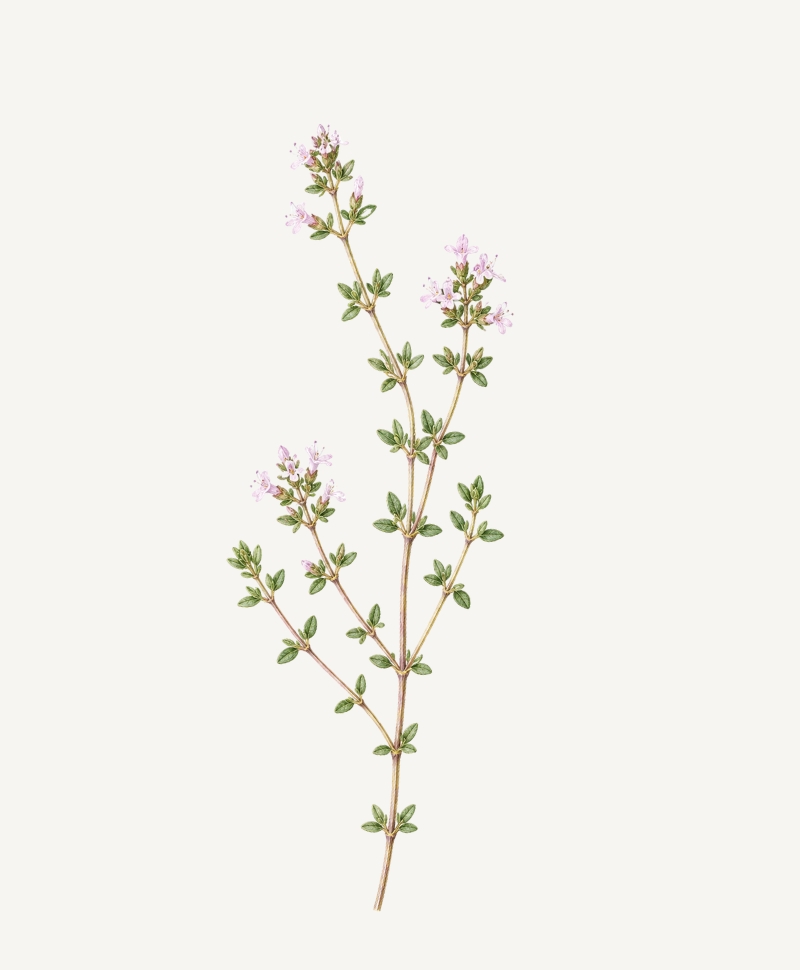
- Low-growing, woody-based perennial rarely exceeding 30cm, forming dense, spreading mats.
- Tiny, aromatic grey-green leaves release a warm, herbaceous scent when crushed.
- Small pink to pale purple flowers cluster at the stem tips in summer, drawing bees in numbers.
- Thrives in poor, dry, well-drained soil and full sun.
- Hardy and drought-tolerant, spreading readily once established.
The information provided on this page is for educational and informational purposes only and is not intended as medical advice. Always consult a qualified healthcare provider before using any herbal remedy, particularly if you are pregnant, nursing, taking medication, or managing a health condition.
Discover More Herbs in the Collection