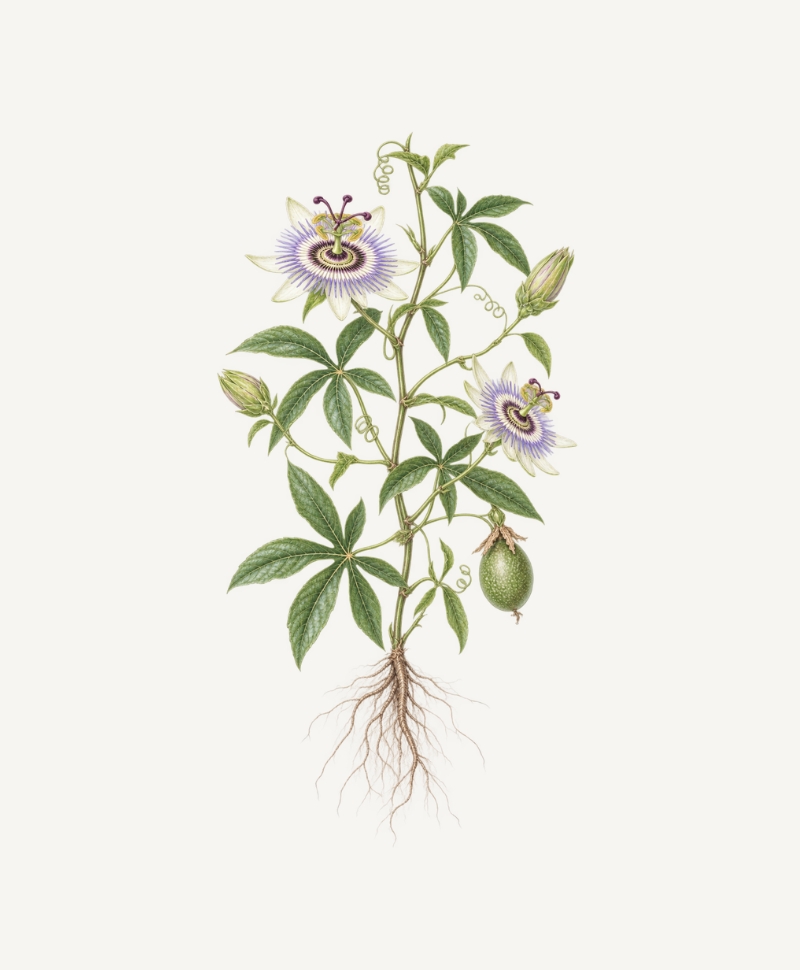
Passion Flower
Passiflora incarnata
Passifloraceae
Southeastern United States
Perennial Vine
Intricate
Symbolic
Climbing
Spanish Christian missionaries in the Americas read the crucifixion into the flower’s unusual anatomy – the ten petals and sepals for the faithful apostles, the fringed corona for the crown of thorns, and the five stamens for Christ’s wounds – naming it for the Passion of Christ, not romantic passion.
- Aerial parts brewed as a calming tea across the American South since the 1800s, a folk remedy long before formal study.
- Used by Indigenous peoples of the southeastern United States before European settlement, for various traditional purposes.
- Folk herbalists have long turned to passion flower to ease restlessness – a historical practice, not a clinical claim.
- A fast-growing, climbing perennial vine that can spread 20 feet or more in a single season.
- Intricate purple-and-white fringed flowers, among the most elaborate blooms in North America.
- Followed by an egg-shaped edible fruit called a maypop, which ripens to yellow-green.
- Deeply lobed, three-part leaves and tendrils that help the vine climb.
- Native to the southeastern United States, spreading readily by both runners and seed.
The information provided on this page is for educational and informational purposes only and is not intended as medical advice. Always consult a qualified healthcare provider before using any herbal remedy, particularly if you are pregnant, nursing, taking medication, or managing a health condition.
Discover More Herbs in the Collection