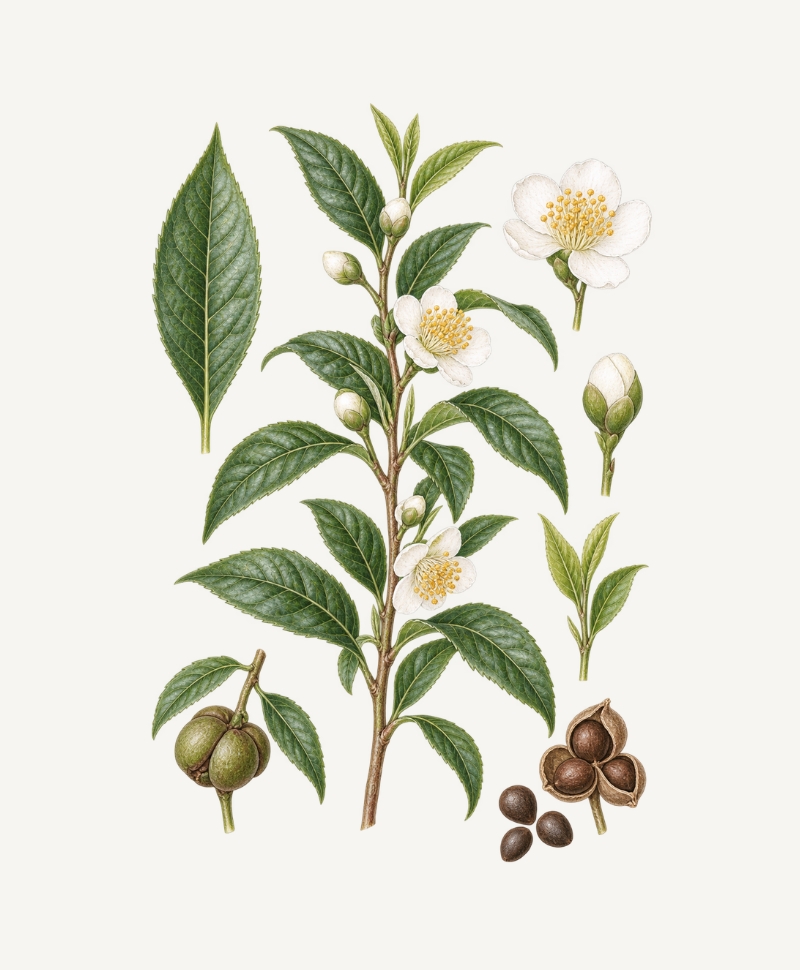
Camellia Sinensis
Camellia sinensis
Theaceae
Southern China and Southeast Asia
Evergreen Shrub
Legend holds that tea was discovered by accident around 2737 BCE, when a dried leaf drifted from a wild camellia bush into a pot of water being boiled for the Chinese emperor Shennong.
- Leaves processed into green, black, white, oolong, and pu-erh tea depending on how they’re withered, oxidised, and dried – all from the very same plant.
- Central to daily life and ceremony across Asia for millennia, from Chinese gongfu tea culture to the Japanese tea ceremony, chadō, or “the Way of Tea.”
- Traditionally taken as a daily infusion valued for gentle alertness and focus – historical practice, not a clinical claim.
- Evergreen shrub or small tree, usually kept pruned low for harvesting but capable of growing over 15 feet tall if left wild.
- Glossy, dark green, serrated leaves with small white, fragrant flowers that bloom in autumn and early winter.
- Prefers warm, humid climates with acidic, well-drained soil and partial shade – thrives at higher elevations with heavy rainfall.
- The tender new growth, or “flush” of young leaves and buds, is what’s hand-picked for the finest teas.
- Long-lived and slow-growing; some cultivated tea trees in China are documented to be centuries, even over a thousand years, old.
The information provided on this page is for educational and informational purposes only and is not intended as medical advice. Always consult a qualified healthcare provider before using any herbal remedy, particularly if you are pregnant, nursing, taking medication, or managing a health condition.
Discover More Herbs in the Collection