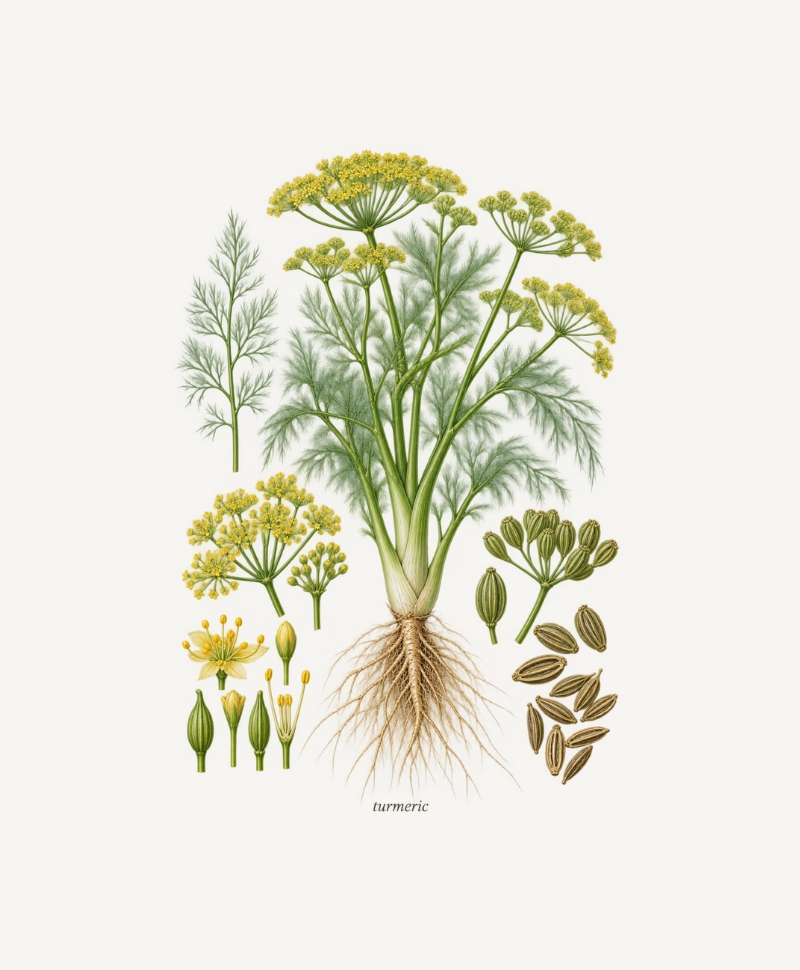
Fennel
Foeniculum vulgare
Apiaceae
Southern Europe and the Mediterranean
Perennial
Aromatic
Feathery
Storied
In Greek mythology, Prometheus is said to have hidden a smoldering ember inside the hollow stalk of a fennel plant to smuggle fire from the gods down to humanity — a myth that made the tall, hollow-stemmed herb a lasting symbol of knowledge and civilization.
- The feathery fronds and ridged seeds flavour breads, sausages, sweet pickles, and fish across Mediterranean and Indian cooking, and the seeds are a key ingredient in Chinese five-spice powder.
- Ancient Greek physicians, including Hippocrates and Dioscorides, documented dozens of fennel preparations for eyesight, digestion, and nursing mothers.
- A cup of fennel seed tea is still sipped after meals to ease bloating and settle the stomach — a historical practice, not a clinical claim.
- A perennial herb that can grow well over a metre tall, with hollow, ridged stems and a light, aniseed scent running through every part of the plant.
- Leaves are finely divided into thread-like, feathery segments, giving the foliage a soft, almost fern-like texture.
- Flat-topped clusters of tiny yellow flowers, called umbels, bloom in summer and give way to ridged, oblong seeds by early autumn.
- Native to the Mediterranean coastline and Anatolia, fennel now grows wild along roadsides and dry, sunny ground across much of the temperate world.
- Named for the Greek word “marathon,” meaning a plant that grows tall — the same word behind the fennel-covered battlefield of Marathon in 490 BCE.
The information provided on this page is for educational and informational purposes only and is not intended as medical advice. Always consult a qualified healthcare provider before using any herbal remedy, particularly if you are pregnant, nursing, taking medication, or managing a health condition.
Discover More Herbs in the Collection