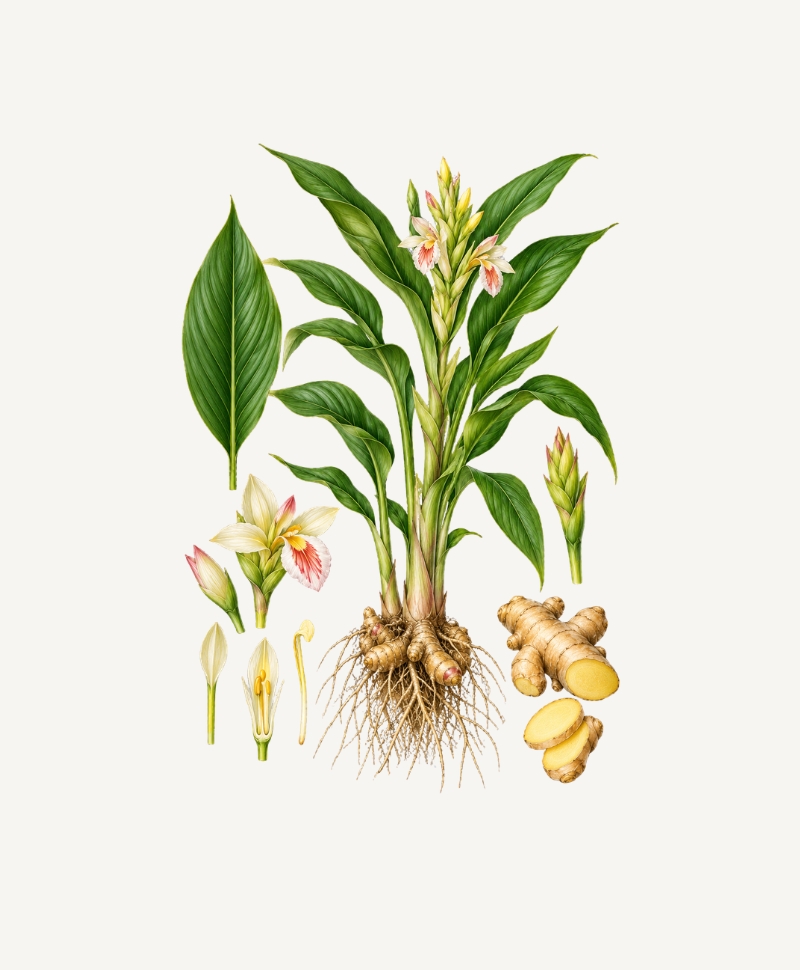
Ginger
Zingiber officinale
Zingiberaceae
Southeast Asia
Rhizomatous Perennial
Queen Elizabeth I is often credited with inventing the gingerbread man, having her court baker shape gingerbread cookies into the likenesses of visiting dignitaries — a clever piece of Tudor diplomacy baked into dough.
- A cornerstone of Asian cuisine for thousands of years, used fresh, dried, pickled, or candied in dishes from Chinese stir-fries to Indian curries to Japanese pickled ginger.
- Carried along the ancient spice routes from Asia to Europe, ginger was one of the first spices traded internationally and was treasured by Roman and medieval apothecaries.
- Folk herbalists have long turned to ginger tea to settle the stomach and ease nausea — a historical practice, not a clinical claim.
- A tropical perennial that grows 2 to 4 feet tall from a thick, knotted underground rhizome.
- Narrow, lance-shaped leaves rise in two neat ranks from slender, reed-like stems.
- Cone-shaped flower spikes bear pale yellow-green blooms with purple-streaked lips, though the plant is grown commercially for its rhizome rather than its flowers.
- The rhizome itself is aromatic and fibrous, with thin tan skin wrapped around pale yellow, pungent flesh.
- Native to Southeast Asia, ginger has been cultivated for so long that it is no longer found growing truly wild.
The information provided on this page is for educational and informational purposes only and is not intended as medical advice. Always consult a qualified healthcare provider before using any herbal remedy, particularly if you are pregnant, nursing, taking medication, or managing a health condition.
Discover More Herbs in the Collection