Lamiaceae
Eastern North America
Perennial Herb
Also called Oswego tea, its leaves were brewed by the Oswego Nation long before colonists adopted the tisane — a habit that spread widely after the Boston Tea Party made British tea scarce.
- Leaves steeped as Oswego tea by the Oswego and other Native peoples for generations before European contact.
- Adopted by colonists during the tea boycotts of the 1770s as a substitute for British black tea.
- Crushed leaves traditionally applied as a poultice to minor cuts and insect bites — historical practice, not a clinical claim.
- Steam from a leaf infusion traditionally inhaled to ease congestion — historical practice, not a clinical claim.
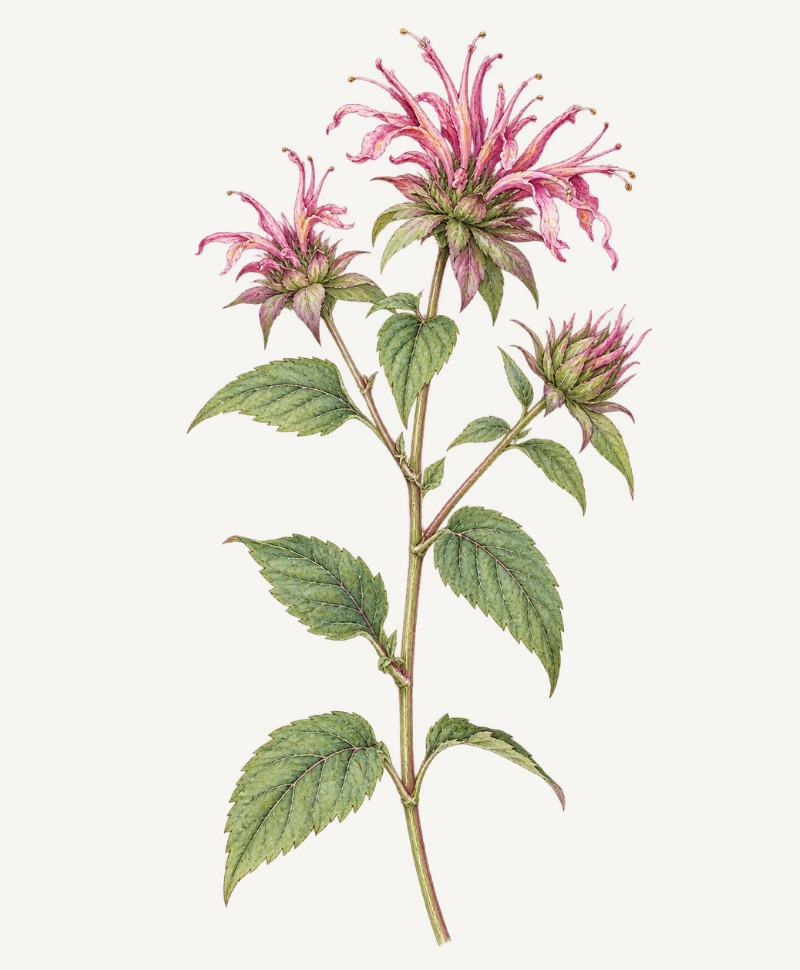
- Upright, clump-forming perennial reaching 60–120cm, with square stems typical of the mint family.
- Shaggy, tubular scarlet flowers cluster in showy whorls, blooming from midsummer through early autumn.
- A magnet for hummingbirds, bees and butterflies — the source of its common name.
- Toothed leaves release a citrusy, oregano-like scent when crushed, similar to bergamot orange.
- Prefers moist, fertile soil in full sun to part shade, and spreads readily by rhizome.
The information provided on this page is for educational and informational purposes only and is not intended as medical advice. Always consult a qualified healthcare provider before using any herbal remedy, particularly if you are pregnant, nursing, taking medication, or managing a health condition.
Discover More Herbs in the Collection