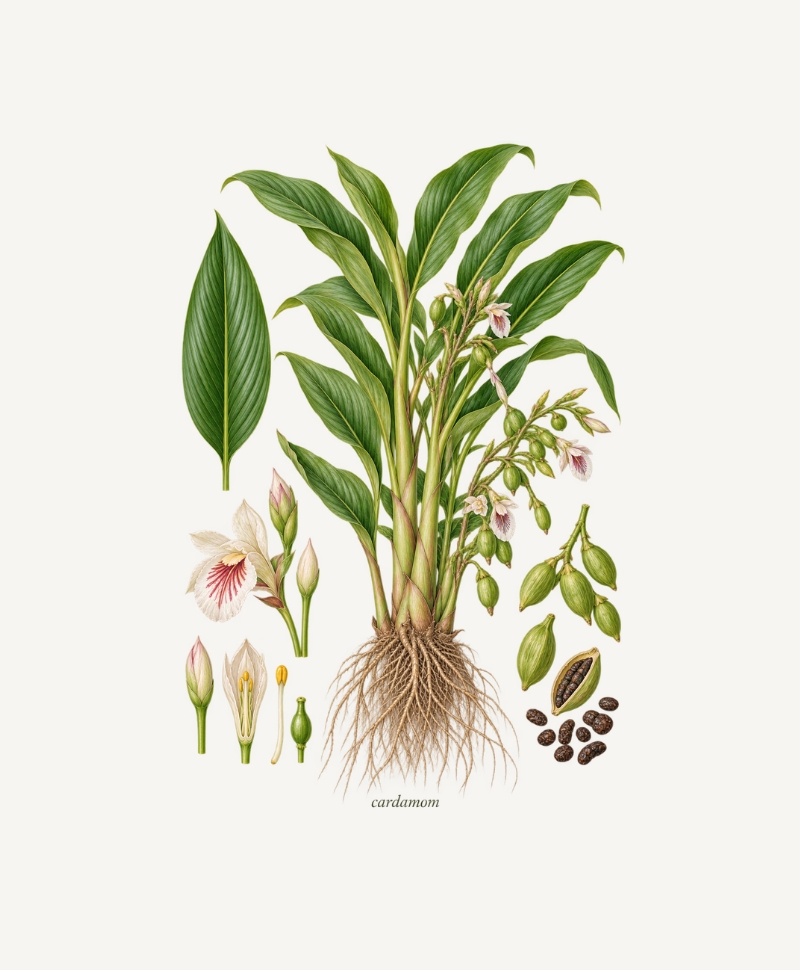
Cardamom
Elettaria cardamomum
Zingiberaceae
Western Ghats, Southern India
Perennial
Long known as the “queen of spices” (black pepper is the king), cardamom was prized enough in the ancient world to be documented by the Greek scholar Theophrastus around 310 BCE and traded along early routes from India to the Mediterranean.
- Whole pods and ground seeds are a foundation spice across South Asian, Middle Eastern, and Scandinavian cooking, from chai and biryani to Nordic pastries.
- Documented in ancient Ayurvedic texts such as the Charaka Samhita (c. 1400–1600 BCE) as a remedy for digestion.
- Traditionally chewed after meals or brewed as tea to ease bloating and freshen breath – historical practice, not a clinical claim.
- Leafy perennial herb with reed-like stalks that can reach 6–10 feet, growing from a branching underground rhizome.
- Produces small white or pale green flowers on separate flowering stems that trail along the ground, followed by three-valved seed pods.
- Native to the shaded, moist evergreen forests of the Western Ghats, where it grows best beneath a forest canopy.
- Pods are hand-picked just before ripening and dried slowly to preserve the essential oils that give cardamom its aroma.
- Slow to mature – a new planting can take two to three years before producing its first harvest.
The information provided on this page is for educational and informational purposes only and is not intended as medical advice. Always consult a qualified healthcare provider before using any herbal remedy, particularly if you are pregnant, nursing, taking medication, or managing a health condition.
Discover More Herbs in the Collection