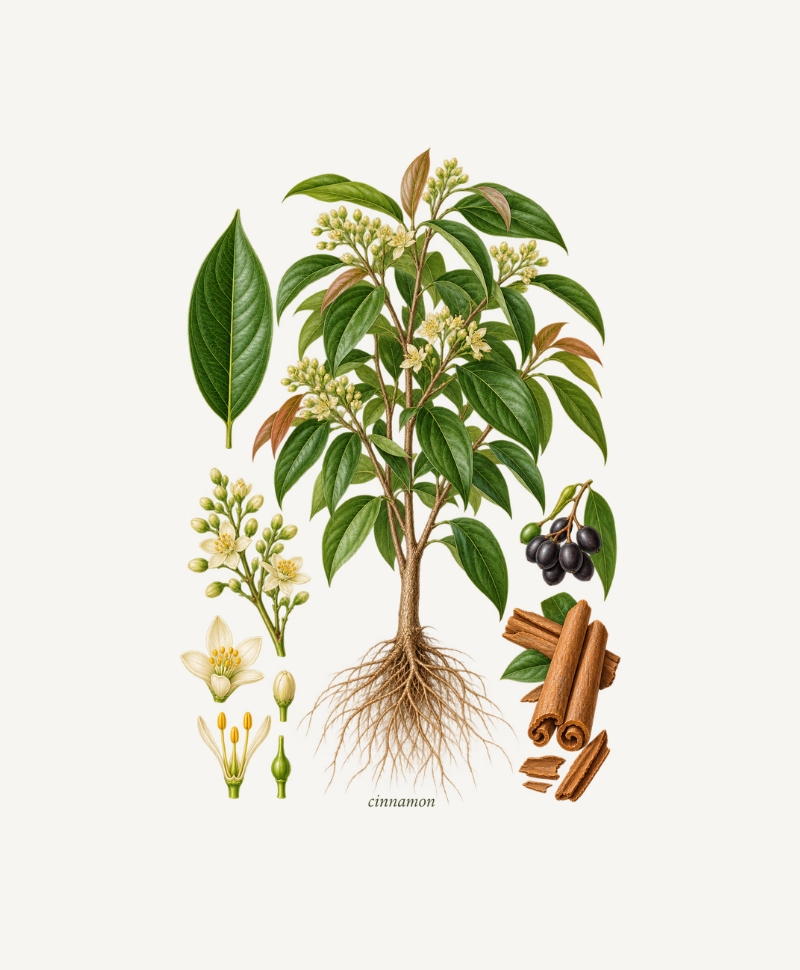
Cinnamon
Cinnamomum verum
Lauraceae
Sri Lanka
Evergreen Tree
Ancient Greek writers like Herodotus claimed cinnamon sticks were gathered by giant birds that used them to build cliffside nests, and that traders lured the birds away with heavy chunks of meat so the sticks would fall for collection — a tale most historians now believe was invented to hide the spice’s true source and justify its steep price.
- Cinnamon bark is harvested by stripping and drying young shoots, which curl naturally into the familiar quills used whole or ground in cooking, baking, and spice blends across the world.
- The spice was a prized commodity in the ancient Mediterranean and classical world, so valuable that the Roman Emperor Trajan featured it on coinage, and it later drove centuries of maritime trade to Sri Lanka and South Asia.
- Folk tradition holds that a warm cinnamon infusion can settle the stomach after a meal — a historical practice, not a clinical claim.
- An evergreen tree in the laurel family, cinnamon can grow over 15 metres tall in the wild but is coppiced back to a low, multi-stemmed shrub on plantations to encourage the young, bark-rich shoots used for spice.
- The tree bears glossy, leathery leaves with three prominent veins, small pale yellow-green flowers with a distinctive odor, and clusters of small dark purple berries once the flowers fade.
- Harvesters cut young shoots, peel away the outer bark, and scrape the inner bark, which curls into quills as it dries — several quills are nested together to form the cinnamon sticks sold whole.
- True Ceylon cinnamon (Cinnamomum verum) is thin-barked, soft, and mild, distinguishing it from the thicker, harder, more pungent cassia varieties often sold under the same name.
- The tree thrives in the warm, humid lowland climate of Sri Lanka, where centuries of cultivation on the island’s southwestern coast made it the historic heart of the global cinnamon trade.
The information provided on this page is for educational and informational purposes only and is not intended as medical advice. Always consult a qualified healthcare provider before using any herbal remedy, particularly if you are pregnant, nursing, taking medication, or managing a health condition.
Discover More Herbs in the Collection