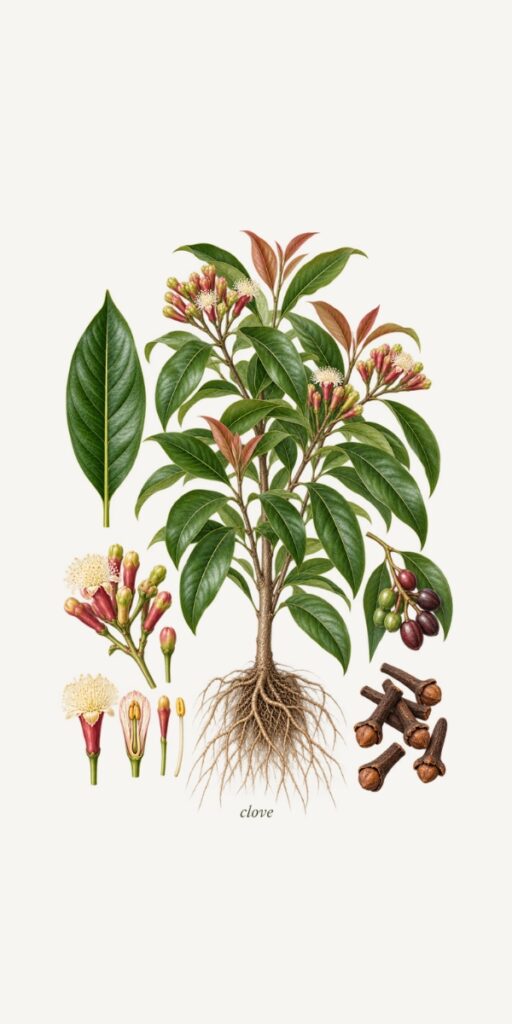
Clove
Syzygium aromaticum
Myrtaceae
Maluku Islands, Indonesia
Evergreen Tree
The name comes from the Latin clavus, “nail,” for the dried flower bud’s unmistakable shape. For centuries the Maluku Islands were the only source of cloves on Earth, and Dutch colonial forces went so far as destroying clove trees on every other island to enforce a total trade monopoly.
- Dried flower buds used whole or ground in cuisines worldwide, from Indian garam masala to European mulled wine and baking spice blends.
- Cloves studded into oranges to make pomanders, a winter tradition once used to freshen rooms and, in folk belief, ward off illness.
- Chewed or applied in folk dentistry to numb tooth pain long before modern anaesthetics – a historical practice, not a clinical claim.
- An evergreen tree growing 30 to 40 feet tall, with glossy, aromatic, dark green leaves.
- Flower buds start pale, then blush pink before being hand-picked and dried to their familiar reddish-brown.
- Clusters of crimson flowers form if buds are left unpicked, followed by a single-seeded fruit.
- Every part of the tree, especially the leaves and bark, carries the same warm, pungent fragrance as the bud.
- Native to the Maluku Islands of Indonesia, now also grown widely in Madagascar, Zanzibar, and Sri Lanka.
The information provided on this page is for educational and informational purposes only and is not intended as medical advice. Always consult a qualified healthcare provider before using any herbal remedy, particularly if you are pregnant, nursing, taking medication, or managing a health condition.
Discover More Herbs in the Collection