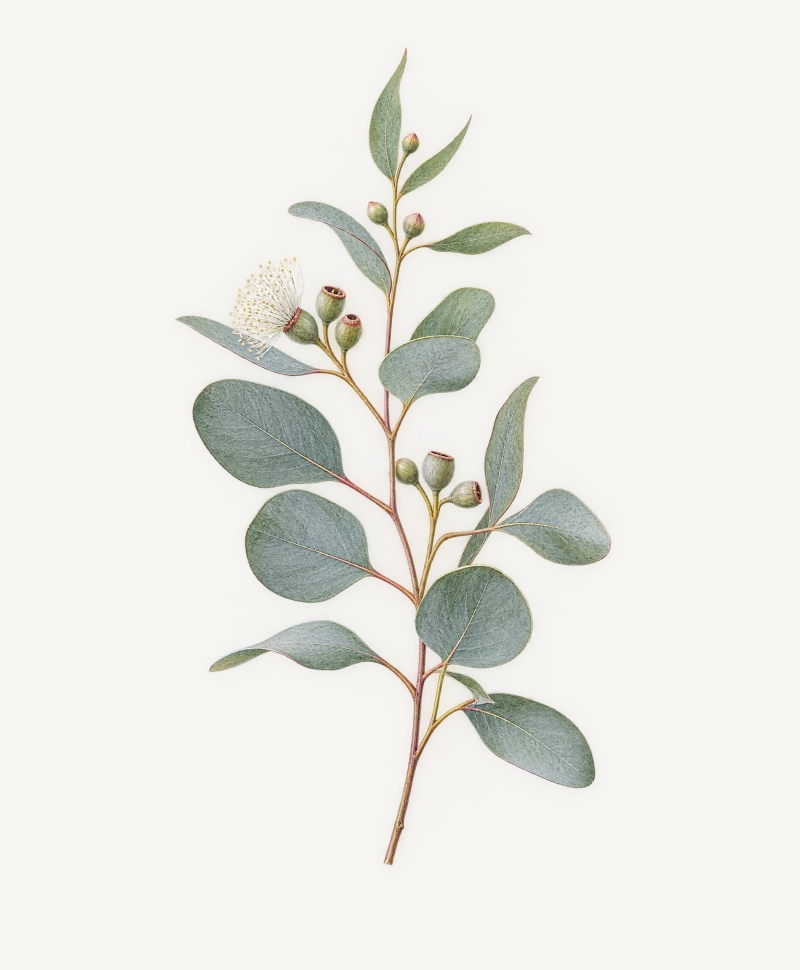
Eucalyptus
Eucalyptus globulus
Myrtaceae
Southeastern Australia
Evergreen
Towering
Aromatic
Resinous
The name comes from the Greek eu (“well”) and kalyptos (“covered”) – a nod to the cap-like operculum that shields the flower bud until it’s ready to bloom.
- Leaves steeped in hot water for steam inhalation across colonial and folk medicine, used to help clear a stuffy head – historical record, not a clinical claim.
- Applied topically by Aboriginal Australians for wound care, later carried into Chinese, Ayurvedic, and European herbal traditions.
- 19th-century French plantations in Algeria drained fever-prone marshland so effectively the tree earned the nickname “the fever tree.”
- Towering evergreen, often exceeding 45m in the wild, with smooth cream-to-white bark that sheds in ribbons.
- Juvenile leaves round and waxy-blue; mature leaves narrow, glossy, and sickle-shaped, releasing a sharp camphor-menthol scent when crushed.
- Oil glands dotted through the leaf carry cineole (eucalyptol), the compound behind that instantly recognizable scent.
- White, fluffy flowers open from woody, ribbed buds capped by a distinctive lid that pops off at bloom.
- A staple food source for koalas, who can safely digest the tough, oil-rich leaves that are toxic to most other animals.
The information provided on this page is for educational and informational purposes only and is not intended as medical advice. Always consult a qualified healthcare provider before using any herbal remedy, particularly if you are pregnant, nursing, taking medication, or managing a health condition.
Discover More Herbs in the Collection