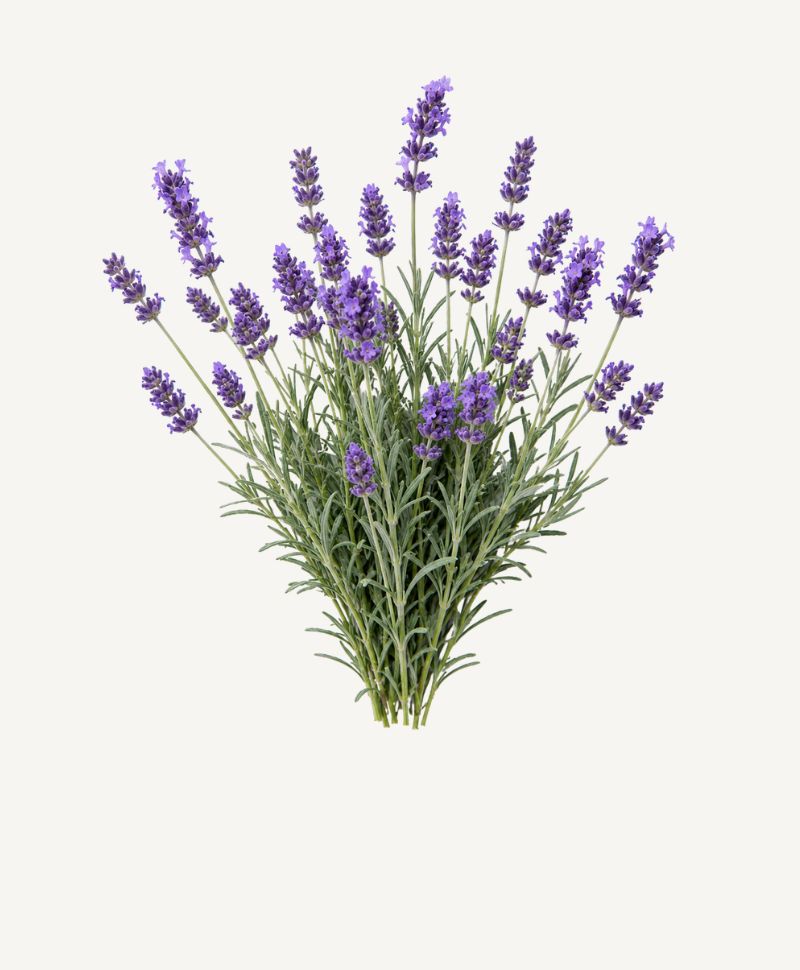
Lavender
Lavandula angustifolia
Lamiaceae
Mediterranean Basin
Perennial
The name comes from the Latin lavare, “to wash” – Romans scented their bathwater with it, and medieval laundry workers who dried linens over the bushes to perfume them became known as “lavenders.”
- Scented Roman bathwater and, later, the wash-water and linens of medieval Europe – the origin of the word “lavender” itself.
- Dried and tucked into sachets and wardrobes for centuries to freshen linens and deter moths.
- Steeped or distilled into oil and used in folk practice to help ease restlessness and support a good night’s sleep – historical record, not a clinical claim.
- Strongly aromatic evergreen shrub, usually 1–2m tall, with narrow, silvery-grey leaves.
- Slender, mostly leafless flower spikes rise well above the foliage, each tipped with tightly whorled purple blooms.
- Square stems and a woody base typical of the mint family, though lavender reads more as a small shrub than a soft herb.
- Thrives in dry, sunny, well-drained ground – a plant built for Mediterranean summers.
- A major draw for bees and other pollinators, and the primary source of commercial lavender essential oil.
The information provided on this page is for educational and informational purposes only and is not intended as medical advice. Always consult a qualified healthcare provider before using any herbal remedy, particularly if you are pregnant, nursing, taking medication, or managing a health condition.
Discover More Herbs in the Collection