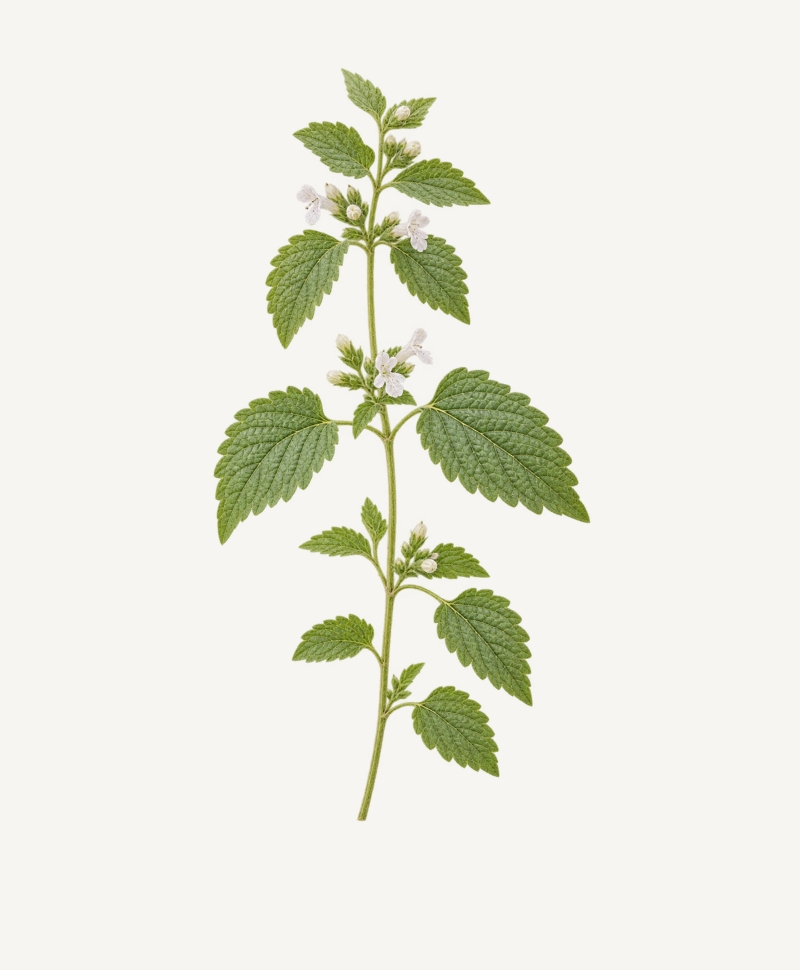
Lemon Balm
Melissa officinalis
Lamiaceae
Southern Europe, the Mediterranean, and Central Asia
Perennial
The genus name Melissa is Greek for “honey bee” — beekeepers have rubbed the crushed leaves inside empty hives for centuries, believing the lemony scent would draw swarms in and encourage bees to stay.
- Infused as “Carmelite water” by French nuns in the 17th century, a lemon-balm-based tonic used to calm nerves and ease headaches.
- Recommended by the Swiss physician Paracelsus as an “elixir of life” believed to revive the spirit and refresh memory.
- Steeped as a mild calming tea in European folk tradition to soothe restlessness and settle the stomach after meals – historical record, not a clinical claim.
- Bushy, low-growing perennial in the mint family, typically 30–60cm tall, with a spreading, clump-forming habit.
- Bright green, heart-shaped leaves with a crinkled texture and scalloped edges, strongly lemon-scented when crushed.
- Square stems and small, inconspicuous white to pale yellow flowers typical of the Lamiaceae family.
- Spreads readily by rhizomes and self-seeding, often becoming a vigorous groundcover in the garden.
- A favorite of honeybees, whose visits are said to improve the flavor of nearby fruit and vegetable crops.
The information provided on this page is for educational and informational purposes only and is not intended as medical advice. Always consult a qualified healthcare provider before using any herbal remedy, particularly if you are pregnant, nursing, taking medication, or managing a health condition.
Discover More Herbs in the Collection