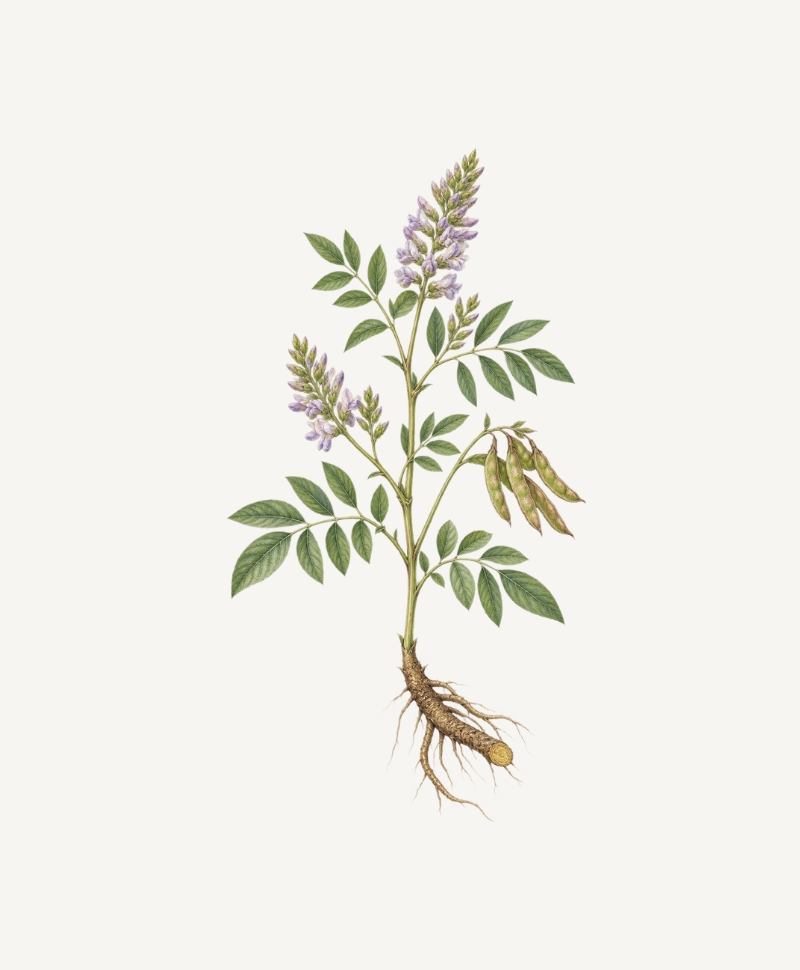
Licorice Root
Glycyrrhiza glabra
Fabaceae
Southern Europe and Western Asia
Perennial
Dried licorice root was found among the treasures buried with King Tutankhamun, likely stocked for the afterlife. Its sweetness comes from glycyrrhizin, a compound roughly 50 times sweeter than sugar.
- A staple of traditional Chinese medicine, where it’s known as gan cao (“sweet herb”) and used to harmonize and balance other herbs in formulas.
- Chewed and brewed across Europe and the Middle East for centuries as a soothing remedy for coughs and sore throats.
- Folk herbalists have long used licorice root tea to ease digestive upset — a historical practice, not a clinical claim.
- A hardy perennial legume that grows 3 to 4 feet tall, with feathery, pinnate leaves.
- Spikes of small, pea-like lavender to violet flowers rise above the foliage on tall stems in summer.
- Flowers give way to small, oblong seed pods.
- Below ground, the plant spreads by long, fibrous, sweet-tasting rhizomes and roots — the part used in herbal preparations.
- Native to Southern Europe and Western Asia, cultivated for thousands of years for its natural sweetness.
The information provided on this page is for educational and informational purposes only and is not intended as medical advice. Always consult a qualified healthcare provider before using any herbal remedy, particularly if you are pregnant, nursing, taking medication, or managing a health condition.
Discover More Herbs in the Collection