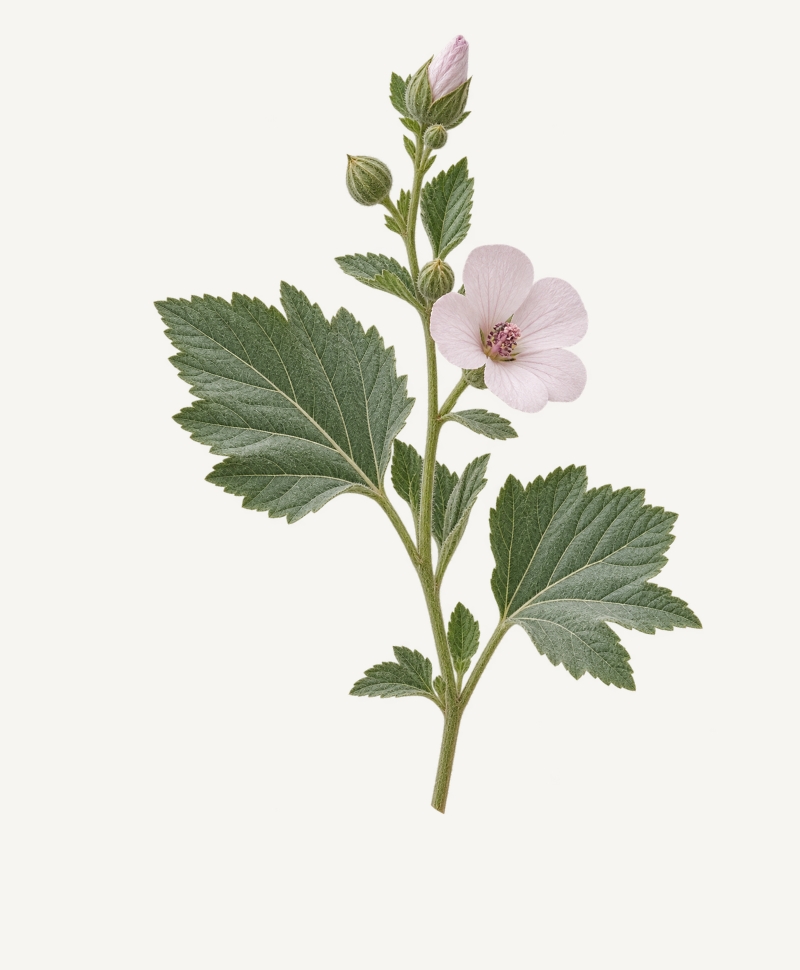
Marshmallow Leaf
Althaea officinalis
Malvaceae
Europe, Western Asia and North Africa
Perennial
The name marks its favourite ground — marshes and salt meadows near the coast. Its Latin root, altho, is Greek for “to heal,” a nod to centuries of use as a soothing remedy — while the root’s sugary mucilage gave the world the original marshmallow, long before gelatine took over.
- Root and leaf infused as a soothing tea for the throat and digestive tract across Europe for centuries.
- Root mucilage boiled with sugar and egg white gave rise to the original French confection pâte de guimauve – ancestor of the modern marshmallow, long before gelatine took over.
- Poulticed leaves applied to skin irritation and insect bites in folk practice – historical record, not a clinical claim.
- Root chewed by children in some traditions to ease teething discomfort.
- Tall, downy perennial reaching 1–1.5m, with soft, velvety, grey-green leaves.
- Pale pink to white five-petalled flowers bloom from mid to late summer.
- Named for its native habitat – the damp marshes and salt meadows of the coast.
- Root and leaf are rich in mucilage, turning noticeably slippery when soaked in water.
- Hardy and spreading once established, favouring moist, humus-rich soil.
The information provided on this page is for educational and informational purposes only and is not intended as medical advice. Always consult a qualified healthcare provider before using any herbal remedy, particularly if you are pregnant, nursing, taking medication, or managing a health condition.
Discover More Herbs in the Collection