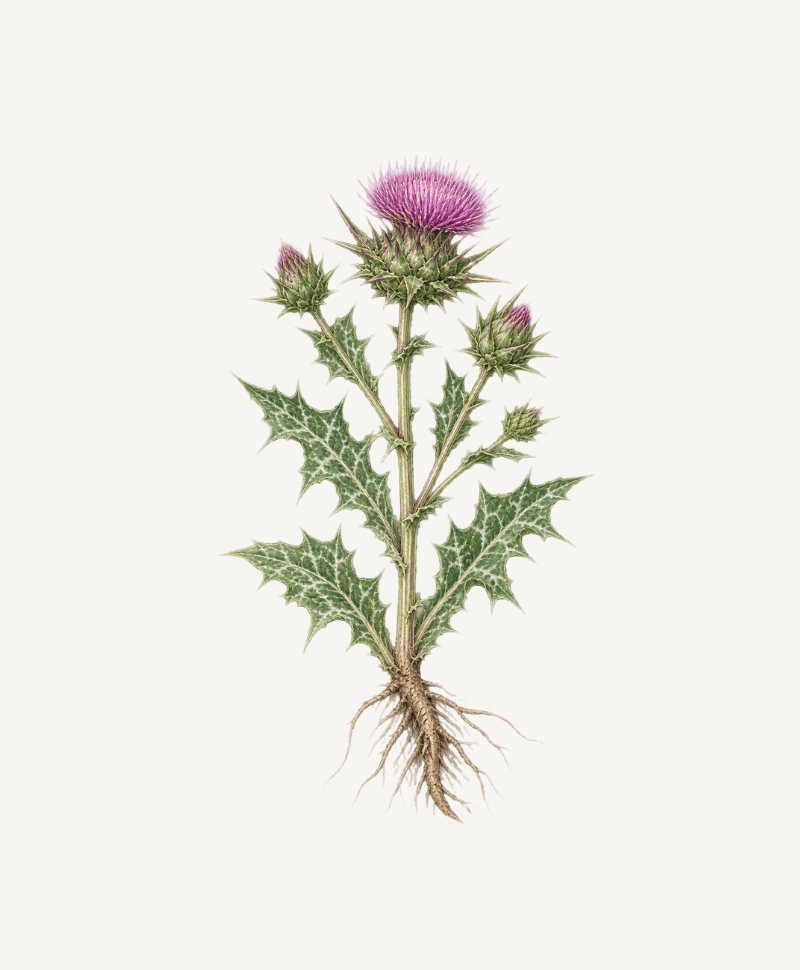
Milk Thistle
Silybum marianum
Asteraceae
Mediterranean Region
Annual or Biennial
The white marbling on milk thistle’s leaves inspired a legend that the veins were drops of the Virgin Mary’s milk, falling as she nursed the infant Jesus while fleeing into Egypt – giving the plant its species name, marianum, and its old folk name, “Our Lady’s Thistle.”
- Seeds pressed for oil and used across the Mediterranean for centuries, in both the kitchen and the medicine cabinet.
- Young leaves and stalks historically trimmed of their spines and boiled as a vegetable in traditional European cooking.
- Folk herbalists have long turned to milk thistle to support liver health – a historical practice, not a clinical claim.
- A tall, spiny annual or biennial reaching up to 5 feet, with a stout, ridged stem.
- Glossy green leaves marbled with distinctive white veining along their spine-tipped lobes.
- Large, vivid purple-pink flowerheads ringed in sharp spines, blooming from late spring through summer.
- Self-seeds freely once established and tolerates poor, dry soil with ease.
- Native to the Mediterranean region, now naturalised widely across Europe, the Americas, and Australia.
The information provided on this page is for educational and informational purposes only and is not intended as medical advice. Always consult a qualified healthcare provider before using any herbal remedy, particularly if you are pregnant, nursing, taking medication, or managing a health condition.
Discover More Herbs in the Collection