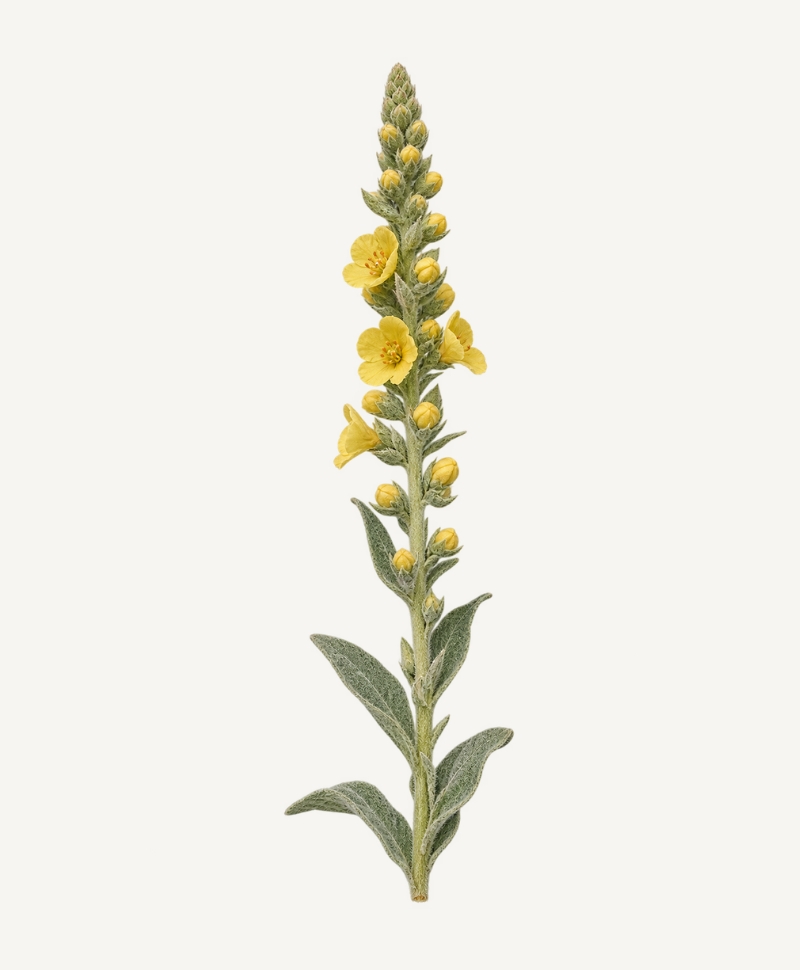
Mullein
Verbascum thapsus
Scrophulariaceae
Europe, Western and Central Asia and North Africa
Biennial
Its downy leaves and stalks were once dipped in tallow and burned as makeshift torches, earning it the old names “candlewick plant” and “hag’s taper” – said to light the way against evil spirits on dark nights. Young women also rubbed the leaves on their cheeks for a natural flush of colour, a trick remembered as “Quaker rouge.”
- Dried flower stalks dipped in tallow and burned as torches – the source of the old names “candlewick plant” and “hag’s taper.”
- Leaves and flowers infused as a soothing tea for the throat and chest across European and Native American herbal traditions.
- Leaves rubbed on the cheeks in folk practice for a natural flush of colour, giving rise to the nickname “Quaker rouge.”
- Soft, felted leaves used by travellers and early settlers as an emergency shoe lining or wrap – historical record, not a clinical claim.
- Tall biennial spike reaching up to 2m in its second year, rising from a low rosette of soft, woolly leaves.
- Leaves and stem are densely covered in fine grey-white hairs, giving the whole plant a felted, silvery look.
- Small five-petalled yellow flowers cluster along the spike, opening just a few at a time.
- Thrives in poor, dry, disturbed soil – roadsides, quarries and waste ground.
- A prolific self-seeder, with a single plant capable of producing hundreds of thousands of seeds.
The information provided on this page is for educational and informational purposes only and is not intended as medical advice. Always consult a qualified healthcare provider before using any herbal remedy, particularly if you are pregnant, nursing, taking medication, or managing a health condition.
Discover More Herbs in the Collection