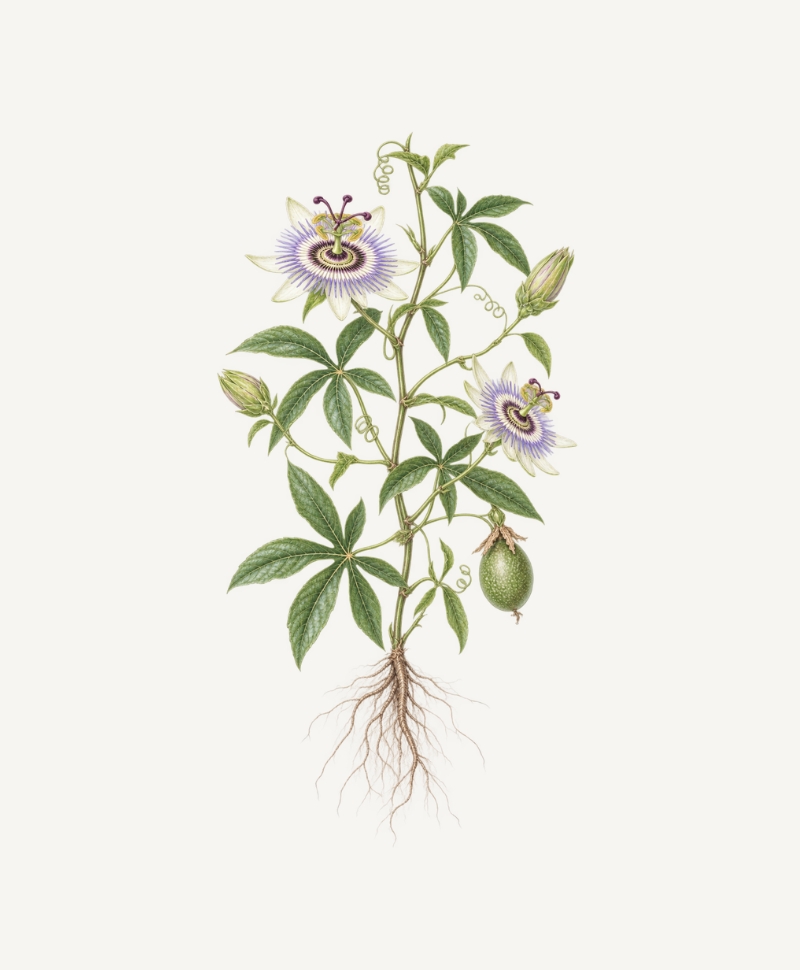
Passionflower
Passiflora incarnata
Passifloraceae
Southeastern United States
Perennial Vine
Calming
Intricate
Untamed
Spanish missionaries in the 1500s named it the “passion flower” after the Passion of Christ, reading its radial filaments as a crown of thorns and its ten petals and sepals as the ten faithful apostles – a piece of symbolism that spread the plant’s fame across Europe long before science took any interest in it.
- Long used by the Cherokee for food and medicine; the plant’s Cherokee name, ocoee, later gave its name to the Ocoee River and valley in Tennessee.
- Adopted into European and American herbal tradition in the 19th century, where the vine’s calming reputation made it a popular bedtime tea – a folk habit, not a clinical claim.
- Often paired with chamomile or valerian in old-fashioned evening infusions, valued simply for winding down after a long day.
- Fast-growing perennial vine, climbing by coiling tendrils and capable of 6–8m of growth in a single season.
- Deeply lobed, three- to five-pointed leaves with small nectary glands along the stalk that attract ants and other insects.
- Large, intricate flowers with a fringe of thread-like purple-and-white filaments encircling the center, blooming from midsummer onward.
- Flowers give way to an egg-sized yellow-green fruit – the “maypop” – said to take its name from the popping sound it makes when trodden underfoot.
- Native to the warm southeastern United States; dies back to the root in winter and returns vigorously from the same rootstock each spring.
The information provided on this page is for educational and informational purposes only and is not intended as medical advice. Always consult a qualified healthcare provider before using any herbal remedy, particularly if you are pregnant, nursing, taking medication, or managing a health condition.
Discover More Herbs in the Collection