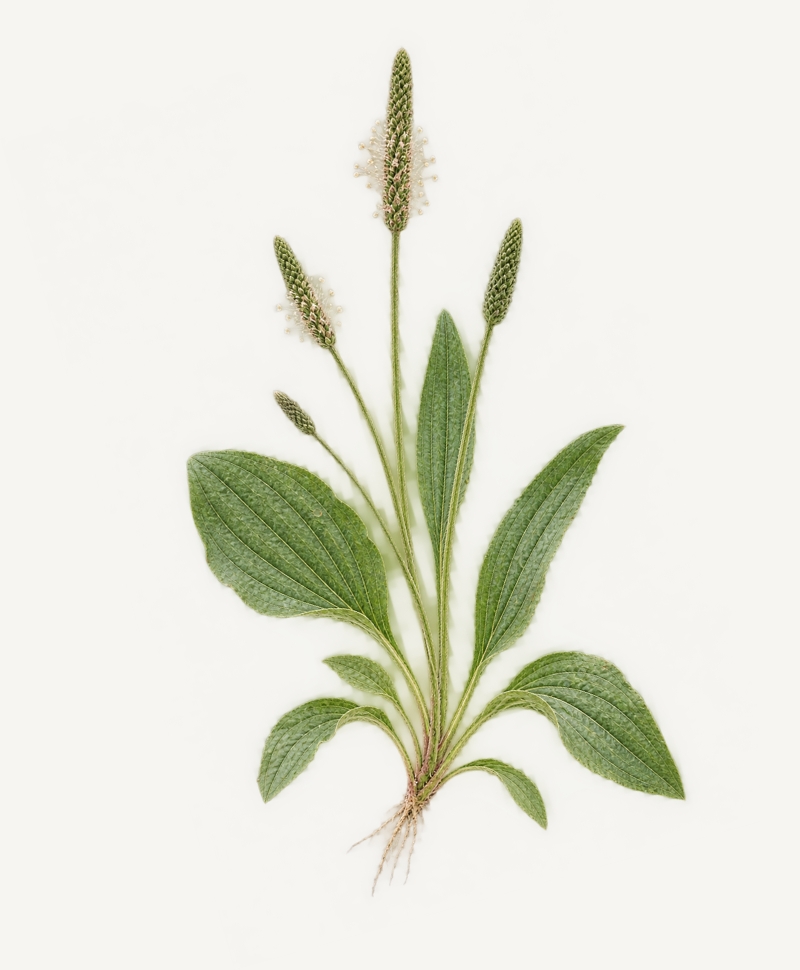
Plantaginaceae
Europe and temperate Asia, naturalized worldwide
Perennial ground-cover herb
Resilient
Humble
Versatile
Anglo-Saxons called it “waybread” for its habit of springing up along every trodden path and roadway; Native Americans later named it “white man’s footprint,” noting how it seemed to follow European settlers wherever they traveled.
- Leaves crushed or chewed and applied to insect bites, stings, and minor scrapes to soothe irritation – historical record, not a clinical claim.
- Used in folk poultices for cuts and skin irritations, valued for its cooling, drawing qualities.
- Brewed as a tea for coughs and mild throat irritation in traditional Anglo-Saxon and European herbalism.
- Seeds used traditionally as a gentle, mucilaginous aid to digestion.
- Mucilaginous leaves said to have a soothing, cooling quality on skin.
- Astringent, mildly bitter taste.
- Known as “waybread” for thriving along paths and trodden ground.
- Regarded as one of the Nine Sacred Herbs in Anglo-Saxon tradition.
- Broad, ribbed leaves growing in a low rosette.
The information provided on this page is for educational and informational purposes only and is not intended as medical advice. Always consult a qualified healthcare provider before using any herbal remedy, particularly if you are pregnant, nursing, taking medication, or managing a health condition.
Discover More Herbs in the Collection