Rosaceae
Europe, Northwest Africa, and Western Asia
Deciduous Shrub
When citrus imports stopped during the Second World War, Britain’s Ministry of Health sent schoolchildren, Scouts, and Women’s Institutes into the hedgerows to gather rosehips – up to twenty times richer in vitamin C than oranges – and turned the harvest into syrup sold in chemists nationwide.
- Gathered from hedgerows for centuries once the frost had sweetened them, and simmered into syrups, cordials, jams, and wine.
- Became a wartime staple in 1940s Britain, brewed into a syrup prized as a home-grown source of vitamin C while imported citrus was unavailable – a home-front habit, not a clinical claim.
- Steeped for their tart, fruity flavor in folk teas and tonics across Europe long before vitamin C itself was ever identified.
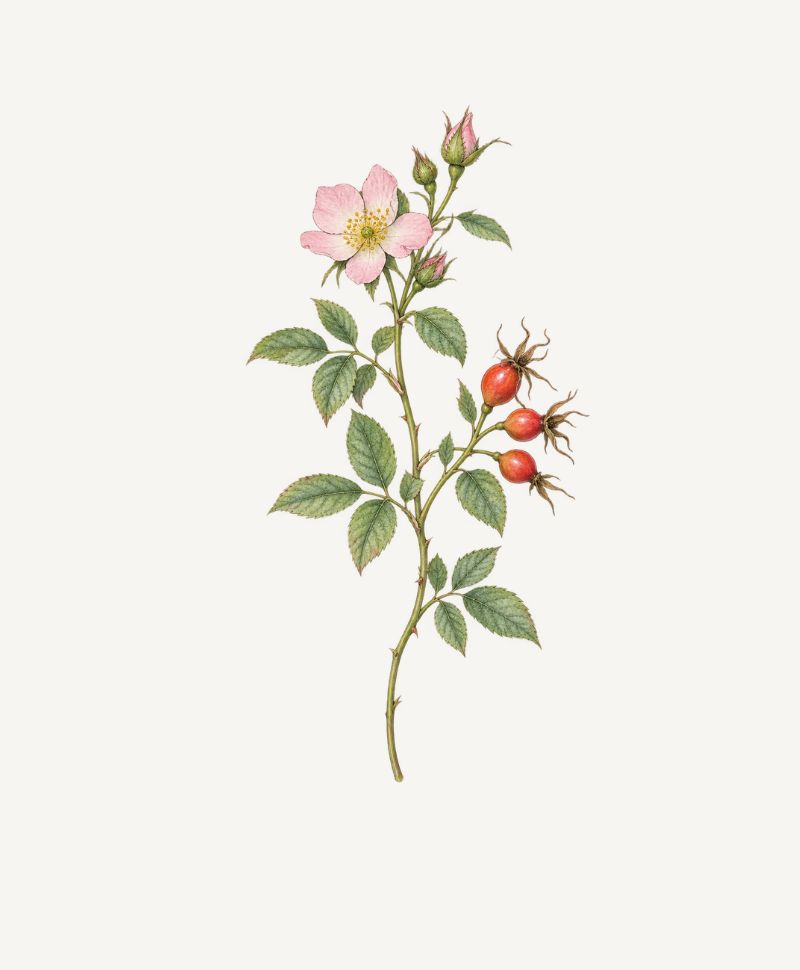
- Vigorous, thorny climbing shrub, scrambling over hedgerows and fences on long, arching canes studded with hooked prickles.
- Simple, toothed, mid-green leaflets in odd-numbered groups, typical of the wider rose family.
- Pale pink to white, five-petalled flowers bloom briefly in early summer, giving way to fruit by autumn.
- The flowers ripen into bright orange-red hips – the swollen base of the flower, not a true fruit – which persist on the bush well into winter.
- Thrives in poor soil and exposed hedgerows across Europe, needing little more than sun and room to sprawl.
The information provided on this page is for educational and informational purposes only and is not intended as medical advice. Always consult a qualified healthcare provider before using any herbal remedy, particularly if you are pregnant, nursing, taking medication, or managing a health condition.
Discover More Herbs in the Collection