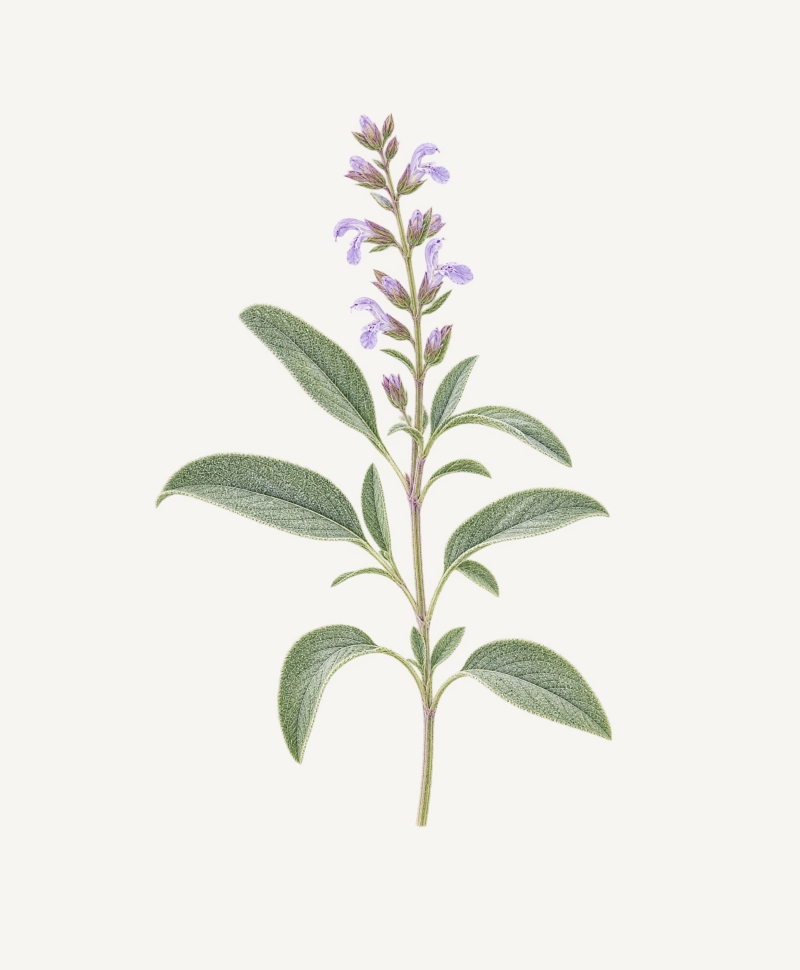
Lamiaceae
Mediterranean region
Perennial
Aromatic
Velvety
Silver-leaved
Its genus name Salvia comes from the Latin salvere, “to be saved” or “to heal” – a reputation so old that the Romans considered it close to sacred, and early harvesters were told to cut it with a blade of bone rather than iron so as not to offend the plant.
- Regarded by the Romans as close to sacred, harvested with ceremony using a blade of bone rather than iron.
- Burned as a smudge in folk practice for cleansing – historical record, not a clinical claim.
- Used across Mediterranean and European cooking for centuries to season rich meats and stuffings.
- Chewed or infused as a tea in folk tradition to freshen the breath and soothe a sore throat.
- Woody-based perennial subshrub reaching 30–60cm, with soft, velvety grey-green leaves.
- Leaves carry a strong, savoury, slightly musky scent when brushed or crushed.
- Spikes of purple-blue flowers appear in early summer, attracting bees.
- Prefers well-drained soil and full sun – thrives in poor, rocky ground.
- Hardy and long-lived once established, though it benefits from occasional pruning.
The information provided on this page is for educational and informational purposes only and is not intended as medical advice. Always consult a qualified healthcare provider before using any herbal remedy, particularly if you are pregnant, nursing, taking medication, or managing a health condition.
Discover More Herbs in the Collection