Lamiaceae
Europe and Asia, naturalized worldwide
Perennial
Refreshing
Sweet
Vigorous
Spearmint takes its name from the spear-shaped tips of its leaves, and unlike its hybrid cousin peppermint, it contains little to no menthol – its sweeter, gentler flavor comes mainly from carvone, the same compound that gives caraway and dill their distinctive scent.
- Prized by the ancient Greeks and Romans, who used it to scent bathwater (often blended with rose petals) and as a restorative, taken the way smelling salts are used today.
- The Romans carried it into Britain along their trade routes, and English colonists later carried it on to North America — one of the most widely travelled herbs in history.
- Chewed, brewed, or powdered for centuries to freshen breath and whiten teeth, and steeped as tea to settle the stomach after a heavy meal — historical record, not a clinical claim.
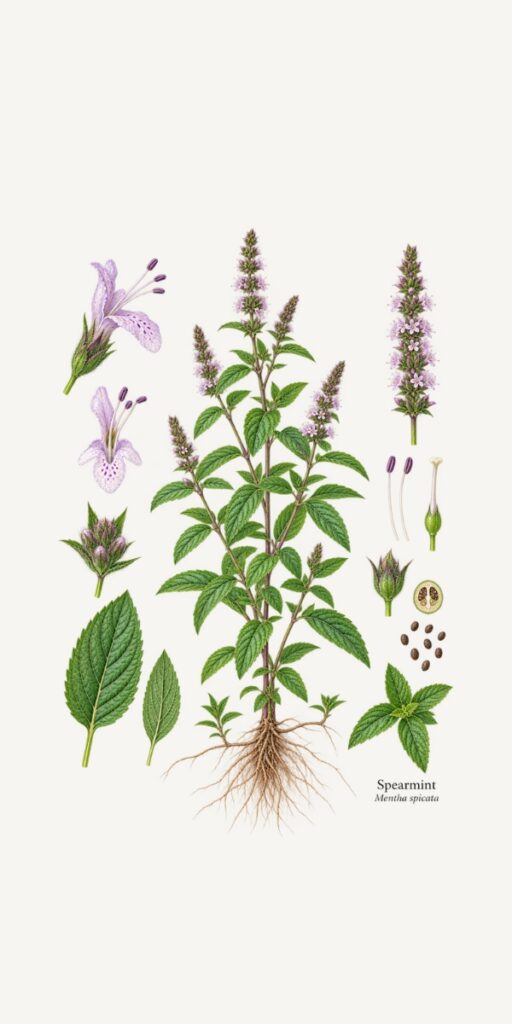
- Aromatic perennial in the mint family, growing 30cm–1m tall on square, mostly upright stems.
- Bright green, toothed, lance-shaped leaves with a sharper, sweeter aroma than its cousin peppermint.
- Spreads by underground rhizomes rather than seed — vigorous and quick to take over a bed if left unchecked, so best kept potted.
- Small pink, purple, or white flowers cluster in tapering spikes above the foliage in summer, drawing bees in numbers.
- Thrives almost anywhere with regular water and a bit of sun — a genuinely forgiving plant.
The information provided on this page is for educational and informational purposes only and is not intended as medical advice. Always consult a qualified healthcare provider before using any herbal remedy, particularly if you are pregnant, nursing, taking medication, or managing a health condition.
Discover More Herbs in the Collection