Zingiberaceae
South Asia
Rhizomatous Perennial
Marco Polo, writing about China in 1280, marvelled at a root with “all the properties of true saffron, as well the smell as the colour,” at a fraction of the price – he had found turmeric. Hindu brides are still anointed with turmeric paste before their wedding as a blessing of purity and prosperity.
- Ground rhizome forms the base of most South Asian curry powders and lends its deep golden colour to rice, mustard, and countless other dishes.
- Central to Ayurvedic medicine and Hindu ceremony for thousands of years, used in wedding rituals, temple offerings, and as a traditional dye.
- Folk herbalists have long turned to turmeric to ease joint and stomach discomfort – a historical practice, not a clinical claim.
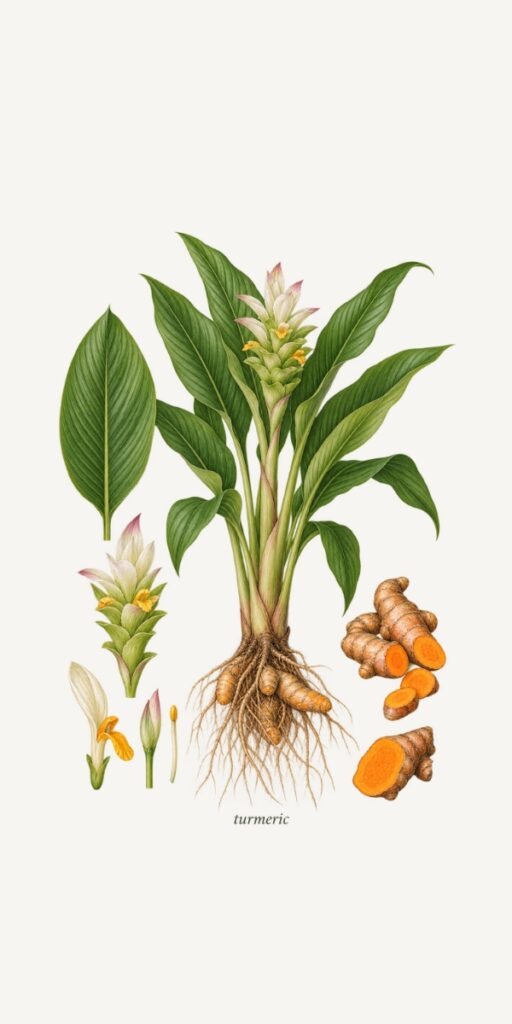
- A tropical rhizomatous perennial growing 2 to 3 feet tall, closely related to ginger.
- Large, glossy, lance-shaped leaves rise directly from a thick underground rhizome.
- Produces spikes of pale yellow-white flowers tucked among pink-tinged bracts, though it’s grown commercially for the rhizome rather than the bloom.
- The rhizome flesh is a vivid orange and stains everything it touches – the source of both its dye and its pigment, curcumin.
- Native to South Asia, cultivated for over 4,000 years and still produced in greatest quantity in India.
The information provided on this page is for educational and informational purposes only and is not intended as medical advice. Always consult a qualified healthcare provider before using any herbal remedy, particularly if you are pregnant, nursing, taking medication, or managing a health condition.
Discover More Herbs in the Collection